Sunday, 15 September 2013

Week 7 - Socialisation Approaches


Image Source:

Welcome to Week 7, pals, this week, we are going to discover socialisation processes in organisation. Socialisation is a process by which an individual adapt him/herself to a collective organisation, it is a dual process for an individual. The organisation is trying to influence the adaptation of individuals through formal and informal socialisation processes.

Models of socialisation phases and content will be analysed at first. Normally, there are three stages in the socialisation processes:
1)   Anticipatory socialisation – it refers to socialisation processes that occur before an individual actually enters an organisation
2)   Encounter – it occurs at the organisational “point of entry,” when a new employee first encounters life on the job
3)   Metamorphosis – this stage occurs when the new employee has made the transition from outsider to insider.

The content of socialisation is relevant to organisational context. Two processes have been grasped during the socialisation process:
1)   Role-related information
2)   Cultural information

Miller (2012, p.128) in the textbook also examines three aspects of socialisation in which communication plays a crucial role.
l  Communication during the employment interview
l  Information-seeking tactics during the encounter phase
l  Ongoing communication in the role-development process

From the organisation’s perspective, the main function of the employment interview is the recruiting and screening of potential employees. From the interviewee’s perspective, the interview provides a glimpse of a possible future employer. But more importantly, the employment interview can serve to ease a newcomer’s adaptation to the organisation should she or he be offered a job.

It is evident that newcomers actively seek information that will help them adapt to their new roles and the norm and values of the organisational culture. Newcomers can seek information in both obvious ways or in a more covert manner.

Role-development is concerned with how individuals interact to define and develop their organisational roles. This process begins when a newcomer enters an organisation and continues through ongoing interactions with the supervisor and other organisational members.
Phases including: role-taking phase, role-making phase and role-routinisation phase.

Rubin (2013) in his media article emphasises that socialisation is a very important process of organisation, because employers can benefit from helping their employees is by recognising the fact that social connection is an integral part of all of our lives now. In today’s social world, a role is developed by an organisational member through a social exchange process with his or her leader, if an individual employee can adapt him/herself to their new role very well, then his/her working performance can be maximised and his/her relationship with supervisors can be consolidated.

References:
Miller, K 2012, Organisational communication – approaches and processes, 6th edn, Wadsworth Cengage Learning, Boston.

Rubin, T 2013, ‘Top-Down Employee Branding’, Business to Community, 18 October, viewed 11 November 2013,

Sunday, 8 September 2013

Week 6 - Critical Approaches


Welcome to Week 6, this week you need to be careful about some abstract principles which will be introduced in lecture and textbook, because those theories and principles are considerably relevant to another discipline of academy – philosophy. But don’t worry, I’ll try to provide you a concise and comprehensible guide here to help you out.

In theory, critical approaches adopt a radical frame of reference by considering organisations as site of domination (Miller 2012, p.101). Individuals from these dominating organisational forces are likely to be emancipated from critical approaches.

As suggested by critical thinkers, some important concepts of critical approaches have to be considered thoroughly:
l  Power
l  Control
l  Ideology and Hegemony
l  Emancipation
l  Resistance

The theory of concretive control and the feminist theories of organisational communication are employed to demonstrate how a critical lens can be placed on organisational communication processes (Miller 2012, p.119).

The theory of concretive control argues that power is embedded in a system of identification and discipline, even in a workplace designed with democratic and participatory ideals, the ideology of management is upheld through the everyday practices of organisational members.

The role of sociology is not simply one of accumulating knowledge, but ‘one of emancipation and change’. Critical thinking is a way of deciding whether a claim is always true, sometimes true, partly true, or false. By taking feminism into consideration, traditional views of organisation - in their traditional and bureaucratic forms – are inherently patriarchal – highlight the importance of individualism, cause-and-effect thinking, and autonomy.

But according to critical theorists, things can be changed in contemporary organisational communication, the civil rights and feminist movements not only created opportunities for previously disenfranchised groups but also helped shape a worldview in which issues of identity and difference became central. Thus, with the emergence of challenges to a single (white, male) vision of society, various groups began to voice their own visions of the social order that fundamentally rewrote previously accepted premises about what is good, right, and possible. For example, gay rights organizations have challenged dominant definitions of “family,” and the feminist movement has helped change long-held beliefs about women’s roles in society.

Here, I’ll put a media story that can help us understand the contemporary femininity in organisational communication. South China Morning Post (2013) published a news article that portrayed the relationship between sexual harassment and male-dominated workplace. In this article, a survey generated by SCMP indicates that forty three per cent of companies in China did not have a policy covering sexual harassment. It is misleading that sexual harassment is only an issue among the staff that does not warrant management intervention, instead, it is emphasised that the hegemonic aspect of relationships between male and female in the workplace is not as equal as it ought to be.


This is what exactly feminist scholars struggling with, the gender equality in workplace. 

References:

Miller, K 2012, Organisational communication – approaches and processes, 6th edn, Wadsworth Cengage Learning, Boston.

South China Morning Post 2013, ‘Too many turning a blind eye towards sexual harassment’, South China Morning Post, 5 September, viewed 11 November 2013,

Sunday, 1 September 2013

Week 5 - Cultural Approaches


Image Source:

Hi guys, welcome to week 5, this week we are going to talk about cultural approaches in organisational communication.

First, we need to examine the prescriptive view of culture which contains two perspectives of “culture” in organisations.
l  Deal & Kennedy’s “Strong Cultures”
l  Peters & Waterman’s “Excellent Cultures”

These two perspectives conceptualise culture as a “thing” that belongs to an organisation. Having the “right” kind of culture of culture can make or break an organisation.

But a number of scholars reject the prescriptive view of culture, they see culture as the emerging and something fragmented values, practices, narratives, and artefacts that make a particular organisation “what it is.” An alternative approach have been taken into account - the description and  understanding of culture – and it elucidates that cultures are very complex, are socially constructed through the communicative interaction of organisational members, are composed of fragmented subcultural unites, and may be fraught with ambiguity.

Edgar Schein, a management scholar and consultant, proposed a very interesting theory with respect to organisational culture, Schein argues that cultures can be best conceptualised as having three levels: behaviours and artifacts, espoused organisational values, and taken-for-granted assumptions about how the world works. Schein’s theory is a very essential tool to understand organisational culture (Miller 2012, p.89-94).

Even if many scholars rejected the perspective of “Strong Culture” proposed by Deal and Kennedy, in my opinion, their strong culture is worthwhile to be interrogated.

According to Deal and Kennedy (1982, cited in Miller 2012, p.83), there are four key components of a strong culture:
1)   Values
2)   Heroes
3)   Rites and rituals
4)   Cultural network

In my experience, business success can be enhanced through the development of a ‘strong culture’. Rites and rituals are key components of a strong culture. Deal and Kennedy suggest that rites and rituals are the ceremonies through which an organisation celebrates its values. Awarding outstanding employees in a corporate-wide banquet is a good example of what Deal and Kennedy suggest of ‘Strong Cultures’. As I discussed in last week, I did my internship in a very large English-training organisation in China. I was very luck to become one of the comperes of the annual end-year convention (usually hold as a large corporate-wide banquet with many interesting components). Awarding outstanding employees is the most exciting component of the banquet, when employees got awarded, the first sentence they uttered is ‘much appreciate for the company in which my diligence and sacrifice can be recognised.’ They became heroes in that organisation and the organisation periodical newsletters would then advocate the spirits and beliefs held by award-winners (cultural network).

Thus, I think this is quite obvious that the employees who get awarded are very happy to be part of the company because their performance in the past year are acceptable and validated. So, their productivity could be improved because the culture of the company provides a ‘rewarding’ atmosphere to its members.

I also recommend you guys to browse a blog article that provides an in-depth analysis concerning organisational culture. Very interesting one.
“On organisational culture change”, by Chris Mowles.

References:

Miller, K 2012, Organisational communication – approaches and processes, 6th edn, Wadsworth Cengage Learning, Boston.

Mowles, C 2013, ‘On organisational culture change’, blog post, Complexity and Management Centre, 7 October, viewed 10 November 2013,

Sunday, 25 August 2013

Week 4 - System Approaches


Image Source:

It’s week 4 now, folks, today we are going to be aware of a new metaphor that has emerged to explain organisations – Systems Metaphor. The core of this metaphor reveals the notion that an organisation is like an organism.

An organisation should be conceptualised as complex open systems requiring interaction among component parts and interaction with the environment in order to survive. There are three components of a system, hierarchical ordering, interdependence and permeability.

These components function in a system. Two types of systems have been mostly characterised and employed at the most basic level.
l  Input-throughput-output processes
l  Feedback processes

From these processes, properties including holism, equifinality, negative entropy and requisite variety can be generated through the operation of systems.

It is noteworthy that a great many theories relevant to organisational communication have been based upon system concepts. Here, I’ll briefly introduce three of them:
l  Cybernetic (Developed by Norbert Wiener)
l  Organising (Developed by Karl Weick)
l  “New Science” System

Cybernetic systems theory highlights the importance of feedback and regulation in goal-directed systems. Organising theory emphasises how organisational interaction revolves around making sense of equivocal information environments. The “New Science” system accentuates the chaotic and complex nature of “self-organising” systems.

Spinuzzi (2013) in his blog argues that sensemaking theory in organisations is often cited by people working in organisational communication, it is literally the making of sense in an organisation. Sensemaking is grounded in both individual and social activity. And it involves making sense in collective situations, usually sensemaking occurs in ambiguous, changing situations, which have characteristics including:

  • Nature of problem is itself in question
  • Information (amount and reliability) is problematical
  • Multiple, conflicting interpretations
  • Different value orientations, political/emotional clashes
  • Goals are unclear, or multiple and conflicting
  • Time, money, or attention are lacking
  • Contradictions and paradoxes appear
  • Roles are vague, responsibilities are unclear
  • Success measures are lacking
  • Poor understanding of cause-effect relationships
  • Symbols and metaphors used
  • Participation in decision-making fluid
This is what Weick interpreted in his theory of organising.

Reference:

Spinuzzi, C 2013, ‘Reading: Sensemaking in Organizations’, blog post, SPINUZZI, 13 May, viewed 10 November 2013,


< http://spinuzzi.blogspot.com.au/2013/05/reading-sensemaking-in-organizations.html >

Sunday, 18 August 2013

Week 3 - Human Relations and Human Resources Approaches


Image Source:

Good afternoon, guys, welcome to Week 3, communication and organisations. This week, I’ll take you guys to discover two types of contemporary organisational management approaches that have been overwhelmingly employed in organisations.

l  Human relations management
l  Human resources management

The theory of human relations management emphasises the significance of human needs and the consideration of management practice and job design to meet those needs.

Contrary to the theory of human relations management, many scholars propose that the human resources management can play a crucial role in the maximisation of organisational productivity and individual employee satisfaction.

It is obvious that both of these two contemporary organisational management approaches signify the importance of communication processes between management and employees. Factors including communication content, direction, channels, and style are all taken into consideration within these two approaches.

Here, I put these theory into practice, this example is still relevant to my internship work as I discussed in last few weeks.

The principal of my institution announces many times that he want to hear more from employees, because the organisation attempts to improve their organisational productivity and the effectiveness of internal communication. As a result, voice of employees cannot be ignored because the organisation should satisfy both organisational needs and employees’ needs.

Hence, my institution provide an opportunity to every employees in the organisation, holding a competition of essay writing through which employees can have a chance to write about their personal standpoints and views towards the processes of organisational communication and operation. The results of holding this competition play positive roles in promoting employees’ job satisfaction and organisational performance,
1)   Participants of the competition will be given valuable rewards as a consequence of their effort to create a better organisational performance
2)   An award ceremony will come along with the annual banquet of the organisation
3)   All award-winning essays will be printed and bound as journals, handing out to every employees’ desk in order to share the valuable thoughts and ideas.

Apparently, the competition is a stage on which employees can have a chance to realise their efforts and commitment throughout, their innovation, idea and feedback can play a vital role in organisational performance. More precisely, the working needs of the award winners can come true through the stage, the organisation is trying to “put people first.”

This example tells us that the main purpose of contemporary organisation communication is to put people first, by constructing a stable and sustainable relationship with employees, organisation can get much more than money. By recognising the importance of employee involvement, organisation productivity will be enhanced because the management can hear something more from their subordinates that they haven’t detected before.

Here is a very useful media story which indicates the importance of human resources management. Well worth reading.
Garland, J 2013, ‘How to achieve workplace giving success’, Australasia fundraising and philanthropy, 5 November, viewed 10 November 2013,
URL:

Sunday, 11 August 2013

Week 2 - Classical Approaches


Image Source:

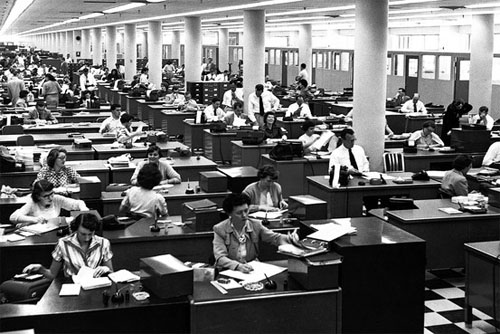
Welcome to week two, pals, this week you’re going to recognise some classical approaches that have been utilised at least a decade ago in organisations. Even if we might see these approaches are quite obsolete, it is undoubted that these classical approaches construct the models of contemporary organisational communication.

It is introduced in the lecture and textbook that there are four classical communication approaches that had been widely employed in traditional organisations:
a)   The Machine Metaphor (Summarised by Katherine Miller)
b)   Classical Management (Developed by Henri Fayol)
c)   Bureaucracy (Developed by Max Weber)
d)   Scientific Management (Developed by Frederick Taylor)

It is also notable that the foundations of the cultural perspective and the emergence of cultural understanding are critical to nowadays organisational communication processes.

The pith of these classical approaches are still adopted in many organisations, communication in these organisations is characterised as predominantly top-down, formal, task-related, and written. But compared with traditional organisations, workers are not as interchangeable as cogs, they are instead an emotional beings exist in an organisation. They expect to be recognised and rewarded rather than to be seen as cogs of machine.

The company in which I did my internship for is pretty much like a type of organisation by which classical approaches have been widely employed. Here, I take Weber’s bureaucracy into consideration. Read carefully, see how I could correlate theories with practice.

When worked as internship in the organisation, I was assigned to deliver marketing contracts, which were in hand-written form, level-to-level for censorship and signature, from the most basic level (marketing manager) to the highest level (director of that enterprise).

The communication flow is shown below:

End in with…  President of the Parent Company
(Her signature is required if total amount of the contract over 100,000 RMB)

Chief Executive Officer (CEO) of the Organisation

Regional Principal of the Organisation

Chief Financial Officer (CFO) of the Organisation
(Authorised and Supervised by the Parent Company)

Manager of Finance Department (Treasurer)

Manager of Legal Affairs

Start with…     Department Manager

It is clear that this route of contract censorship and signature copes with the principles suggested by Weber, that bureaucracies as working through a system of authority, power and discipline. Each of the person in the route are hierarchically distributed and arranged from employee level to management level. Each of those has a specific power in the department and organisation and all of them are responsible for every cent of cost. Hence, Weber’s theory of bureaucracy is somehow in operation in contemporary organisational functioning.

Here is a little tip for you guys, if you try to write an in-depth audit, textbook reading is just a beginning, go find a job, experience it, observe it and summarise what you get.


Wit once bought is worth twice taught.

Sunday, 4 August 2013

Week 1 - The Challenge of Organisational Communication


Image Source:

Hi guys, normally there is no tutorial scheduled on the commencing week, so what you need to do is to attend the lecture and read some chapters with reference to a given topic.

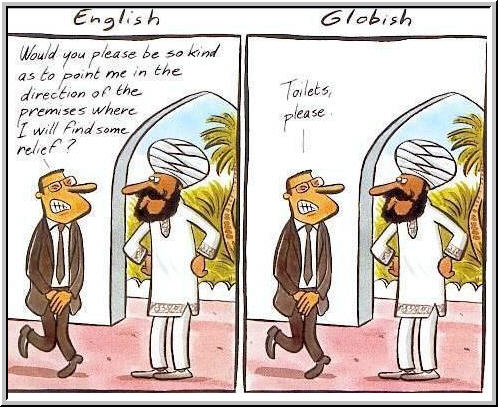
This week we need to be aware of the challenge of organisational communication. In this day and age, everything is changing rapidly, the way we communicate with each other, the way we cope with issues in the workplace, the way we … everything in our life and work is poles apart.

From the textbook, there are several points concerned by G L Pepper (1995) and K Miller (2012) regarding organisational communication are noteworthy:

l  Communication in organisation becomes much more complex than last few decades
l  Communication in organisation is not simply a linear way to send message back and forth among sender and receiver, it is rather a way that organising people to approach a common understanding that maximise the organisational productivity
l  Our world is changing constantly due to globalisation and so do the organisations, people are getting closer and closer in the workplace, communication is becoming an increasingly indispensable skill that organises and coordinates employees with different cultural background.
l  Communication is becoming more and more complex than the past because the language or symbols of group interaction may be more important than the actual physical group experience.

In addition, the concept of “fantasy” might be helpful for understanding the processes of information dissemination. “Fantasy” refers to the symbolic convergence theory, which provides a description of the dynamic tendencies within systems of social interaction that causes communicative practices and forms to evolve. This theory isn't concerned with finding truth, but the reaction from the group when these fantasies are shared. Most of the time, these fantasies trigger a chain reaction within the group where they will contribute more and more to the conversation or fantasy.

I’d also like to share something in practice with you guys. It relates to what I experienced in the workplace.

In my opinion, communication in most Chinese organisations is not organised as a set of concise and consistent processes. I worked for an organisation, which is called the “China’s largest English training institution”. In that organisation I was responsible for providing general assistance to the Dept. of Marketing. I found that the majority of employees and the management were not keen to coordinate and communicate with each other because they are not on the same level. Communication is “simple” because when the management set an order to employees, none of whom are allowed to go against. The distinction between superior level and inferior level plays a counter-productive role in the organisation. But think about what I’ve noted above, communication in organisations is becoming more and more complex and intangible, the management can no longer act as a general commander that systematically hinder the way of communication.


So, folks, what do you reckon? 

References:


Miller, K 2012, Organisational communication – approaches and processes, 6th edn, Wadsworth Cengage Learning, Boston. 

Pepper, G L 1995, Communicating in organisations: a cultural approach, McGraw-Hill, New York, viewed 18 August 2013, University of South Australia,